

Sleeping in a Hotel With Kids: What Actually Works

If you’ve ever stressed about sleeping in a hotel with kids, you’re not alone. Whether you have a baby, toddler, preschooler, or bigger kids, figuring out where everyone will sleep, and how anyone will actually stay asleep, can feel overwhelming.
Before my first hotel stay with both kids, I remember worrying about everything: where does the baby sleep when traveling, how hotel cribs actually work, and whether sharing a single room would mean no one got any rest. Those questions felt even bigger when I was the only adult on the trip, but they come up for almost every family at some point.
The good news is that once you know what to expect, and have a few tricks to make it work, sleeping in a hotel with kids becomes much easier than it sounds. In this guide, I’ll walk you through real setups that work for families, from hotel cribs and bed rails to room-darkening hacks, toddler sleep setups, and my go-to tips for sharing a hotel room with kids without losing your sanity.
What Room Types Are Available?
Rooms vary so much depending on where you are in the world. The brand, location, and even country can completely change what’s available and how it’s described.
A standard hotel room in the United States (and much of the Americas) usually has either:
- One king or queen bed, with an occupancy of two
- Or two queen or twin beds, with an occupancy of four
If you’re staying at a resort or extended-stay brand, you’ll often see studio rooms or family suites that include a pull-out couch in addition to the main bed.
Around the world
Hotel rooms in Europe and Asia tend to be much smaller and often only allow two guests per room. We’ve had luck adding a third baby or toddler to a two-person room in both the U.K. and Portugal by contacting the hotel directly and requesting a crib.
In some countries, family rooms or triple rooms (with one double bed and one single) are more common, and in others, you may need to book connecting rooms to accommodate multiple people. Always check a hotel’s listed maximum occupancy. If you’re unsure, contact the property directly. Many will allow an extra baby or toddler once they understand your family setup, but you always want that confirmed before you book.
Traveling with kids?
Get the Free Travel Documents Checklist for Families
Before you head to the airport, make sure you’ve thought through the documents your family may need, including IDs, passports, birth certificates, consent letters, health documents, and helpful backup copies.


Where Does Baby Sleep When Traveling?

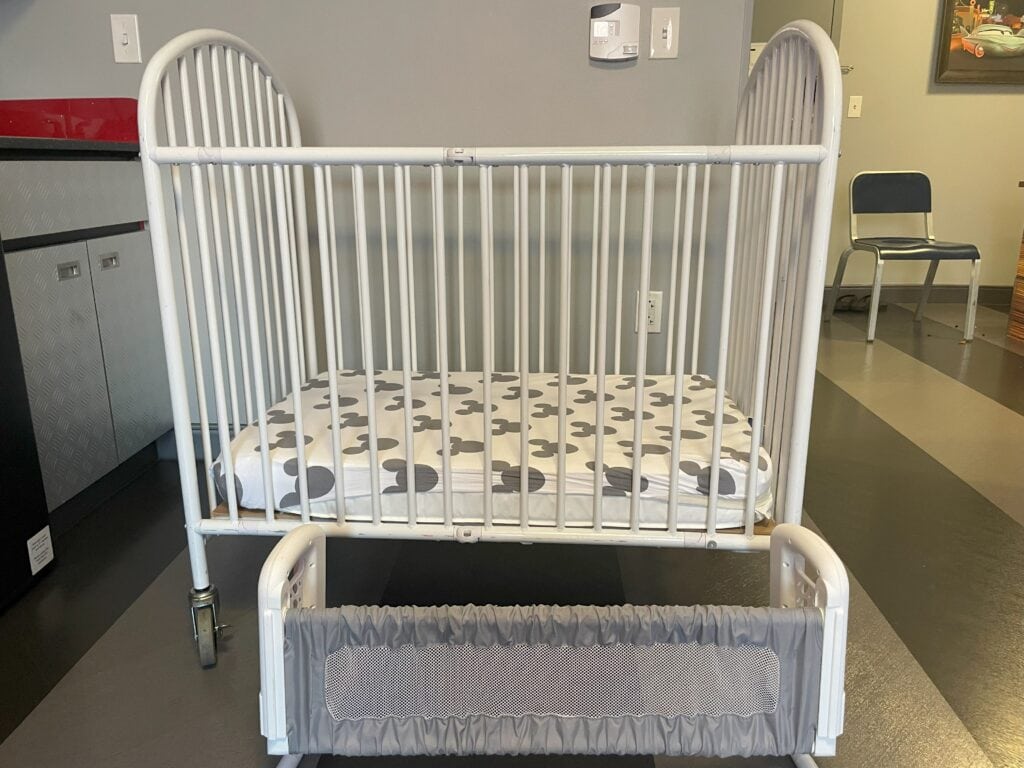
If you’re traveling with a baby, one of your biggest concerns is probably where they’ll sleep. The good news: in the U.S. and in many other parts of the world, most hotels offer a crib or Pack ’n Play upon request. Some are free; others may charge a small fee.
When I travel with my kids, I usually prioritize packing light, so borrowing a crib from the hotel is usually my first choice. But the quality can really vary.
- At places like Disney World, Royal Caribbean’s Freedom of the Seas, and Residence Inn London Bridge, the provided crib or Pack ’n Play was excellent quality and exactly what I needed.
- At others, like Moxy Southampton and Fairfield Inn & Suites Miami Airport South, the Pack ’n Play I received was barely functional, and I did not feel comfortable using it as-is.
If you’re unsure what to expect or want a guaranteed safe sleep setup, here are a few alternatives:
- Co-sleep safely if that’s how your baby sleeps best at home and you can do it in a way that feels safe for your family
- Use furniture creatively when it makes sense. I’ve turned couches toward the wall to create a contained sleep space for a toddler
- Rent gear from a baby equipment service like BabyQuip
- Bring a portable crib (great for frequent travelers, as long as you have the luggage space)
Need a Safe, Reliable Crib While Traveling?
If your hotel’s Pack ’n Play is a question mark, or they don’t offer one at all, BabyQuip can be a really helpful option. You can rent clean, high-quality baby gear (including cribs, bassinets, and even blackout curtains) and have it delivered straight to your hotel, Airbnb, or vacation rental.
✨ Check availability through BabyQuip and reserve the sleep gear your baby needs for your trip. ✨
Making the Room Dark and Quiet


If your child is used to a dark room and a sound machine at home, this can be one of the trickiest parts of sharing a hotel room.
We always travel with our sound machine, and it makes a huge difference for us. As for creating darkness, here are a few setups that have worked for us over the years:
- Book a suite with a separate bedroom. This is the easiest way to create a “baby room” you can close off.
- Put the crib in the bathroom, entryway, or closet area if the layout allows. At the Walt Disney World Swan Reserve, I slid our Pack ’n Play into the bathroom area and it worked perfectly.
- Create a curtain partition. On our Freedom of the Seas sailing, I brought magnetic hooks and a blackout curtain to make a mini sleep zone inside our stateroom.
- Use a SlumberPod or similar blackout cover for the crib.
Those little changes can make the difference between everyone sleeping peacefully and no one sleeping much at all.
Want Instant Darkness for Baby Sleep?
If your baby naps best in a dark, quiet room, SlumberPod can be a really helpful travel tool. It’s a breathable blackout canopy that fits over a Pack ’n Play or travel crib, giving your baby a private sleep space, even in the middle of a hotel room.
✨ Check price and availability on SlumberPod to see if it’s the right fit for your next trip. ✨
Sharing a Hotel Room With Kids (Toddler & Preschool Years)


As my kids have aged out of cribs, sharing a room has gotten interesting. Toddlers and preschoolers come with a whole new set of challenges.
Falling out of bed
For a while, my kids were too big for cribs but still felt too little for tall hotel beds. If you’re lucky, you might find a place that provides bed rails—Disney hotels and Disney Cruise Line both do. Just request them from housekeeping.
If not, I’ve had great success rolling up towels or extra pillows and tucking them under the fitted sheet along the mattress edges. It creates a soft bumper that keeps kids safely in bed.
Sharing a bed
My kids aren’t used to sharing a bed, which means there’s usually some kicking, giggling, and fighting involved. I’ve learned a few tricks:
- Roll a towel or small blanket under the fitted sheet in the center of the bed to create a “divider.”
- Book a room with multiple bed options, like two queens plus a sleeper couch, or a suite with a second sleeping area.
Refusing to go to sleep
Because my kids normally sleep in separate rooms at home, sharing one space feels like a slumber party. For a while, I used to turn off the lights, play the sound machine, and pretend to be asleep myself, hoping they’d settle. It worked for a bit, until it didn’t.
Now, my go-to trick is to let them unwind with their iPads once the lights are off and the sound machine is on. After a long travel day, they’re usually so tired that they fall asleep mid-show. It also gives me a few quiet minutes to scroll or read without them noticing.
If your hotel room allows, separating sleeping areas helps too. When we’ve had suites, splitting them up—one in the bed, one on the pullout—makes bedtime so much smoother.
Middle-of-the-night wakeups
Even great sleepers tend to wake more often in hotels. New sounds, time zones, and the novelty of sharing space all play a role. My best strategy is to get to the awake kid fast, before they wake the other.
I’ll quietly bring the awake one to my bed, figure out what they need, and sometimes hand them an iPad to settle if it’s the middle of the night. It is not glamorous, but it keeps the peace.
Bigger Kids
My kids aren’t quite here yet, but I’ve already seen how things change as kids get older while traveling with my niece. Once kids reach school age, they may start wanting privacy and their own space, which is completely valid.
Here are some ideas that work better for older kids:
- Book a suite with a higher occupancy or a second bedroom if your budget allows.
- Request connecting rooms if the kids are old enough to sleep separately (and the hotel policy allows it).
- Ask about rollaway beds—many hotels can bring one in if space allows.
- Try apartment-style or extended-stay hotels, which often have full bedrooms and kitchens for the same price as a traditional room.
- If you’re in Europe or Asia, look for “family rooms,” which often have three or four beds built in.
What Actually Works for Sleeping in a Hotel With Kids
Sharing a hotel room with kids can feel intimidating at first. You might worry about how anyone will sleep, what the setup will look like, or whether you’ll be up all night juggling wakeups.
But here’s the truth: you’ll figure it out, and it gets easier every time.
Every family’s version of “working” looks different. Some nights might involve a hotel crib in the corner, a SlumberPod in the closet area, a toddler on a pullout couch, or everyone piled into one bed. The key is flexibility.
You’ll have rough nights, but you’ll also wake up to your kids snuggled next to you, excited for another day of adventure. That’s the part you’ll remember most.
Have questions about this post or want help thinking through the logistics for your own trip? Join my free Facebook community for parents planning family travel. You can ask questions, share what you’re working through, and get real-life advice from other parents who understand how many little details go into traveling with kids.
More Helpful Family Travel Tips
- Traveling With Kids: How to Make the Logistics Feel More Manageable
- Child Travel Consent Letter: When You Need One
- What I Teach My Kids About Getting Lost While Traveling
- How to Travel Without Car Seats: Safe Options for Every Trip
- Staycations With Kids: The Easiest First Step for Nervous Family Travelers