

What I Teach My Kids About Getting Lost While Traveling

Airports. Disney parks. Crowded museums. Busy city streets. When you’re traveling with kids, there are a lot of moments where getting separated can happen fast.
It’s something most parents try not to think about, but when you’re juggling kids, strollers, luggage, directions, snacks, and everything else that comes with family travel, you can’t have your eyes everywhere at once. And if you’re the only adult, that pressure can feel even heavier.
I’ve had my own heart-stopping moment. Once at EPCOT, inside the SeaBase Aquarium at The Seas with Nemo & Friends, both my kids wanted out of the stroller to get a closer look at the fish. They were two and three at the time. My son asked me a question, so I turned to hear him over the noise for maybe a second or two. When I looked back, I couldn’t see my daughter anywhere.
She was on the other side of the tank, completely fine. But those few seconds felt endless. My whole body froze.
And honestly, it reminded me how quickly things can happen, even when you’re paying attention.
Kids move fast. Crowds are chaotic. Sometimes one child needs something while the other heads in the opposite direction. That doesn’t make you a bad parent. It makes you human.
Over the years, I’ve put a lot of thought into how I prepare my kids for crowded airports, Disney parks, and busy destinations, along with what I would actually do if one of my kids got lost while traveling. This is the plan we use.
Traveling with kids?
Get the Free Travel Documents Checklist for Families
Before you head to the airport, make sure you’ve thought through the documents your family may need, including IDs, passports, birth certificates, consent letters, health documents, and helpful backup copies.


Why Getting Separated While Traveling Happens So Fast
One of the hardest parts about traveling with kids is that there are constantly little moments pulling your attention in different directions.
You’re checking a gate number while someone asks for a snack. You’re folding a stroller while trying not to lose sight of a toddler. You’re paying for coffee, scanning a train schedule, helping one child in the bathroom, loading luggage onto a shuttle, or trying to navigate a crowded theme park during a fireworks exit.
And of course, kids move fast.
I think a lot of parents picture situations like this happening because someone wasn’t paying attention, but honestly, most of the time it’s the exact opposite. Usually you’re paying attention to everything all at once.
Travel also puts families in environments that are naturally harder to navigate. Airports are loud and overstimulating. Theme parks are crowded and distracting. Tourist destinations are unfamiliar. Even something simple like stopping to look at a map or check your phone for directions can create a split second where everyone isn’t moving together anymore.
When you’re the only adult, that pressure feels even bigger because there’s no extra set of eyes helping you keep track of everything.
That’s why I think having a simple plan matters so much. Not because you expect something bad to happen, but because crowded travel situations are unpredictable, even for very attentive parents.
What I Teach My Kids Before Every Trip
I know a lot of people avoid talking about this because they don’t want to scare their kids, but I’ve actually found the opposite to be true. Having a simple plan tends to make everyone feel calmer, including me.
We talk about these things casually before trips, especially before places like airports, Disney parks, museums, fairs, or crowded city centers. Not in a scary way. Just in a matter-of-fact, “here’s what we do if we can’t find each other” kind of way.
The goal isn’t to make kids anxious. It’s to help them feel prepared.
Stay Put If You Realize You’re Lost
This is probably the biggest thing I repeat to my kids.
If they realize they can’t see me, I want them to stop moving immediately instead of trying to search for me themselves. A wandering child is so much harder to find in a crowd, especially in busy places like airports or theme parks where everyone is moving in different directions.
We practice this a lot. If they can’t see me, their job is to stay where they are and look for help nearby, not keep walking.
Look for a Safe Adult
We also talk often about who safe adults are when we travel.
Depending on where we are, that might be:
- a Disney Cast Member
- airport staff
- a lifeguard
- a security guard
- a museum employee
- or another parent with children nearby
I try to point these people out in real time when we arrive somewhere new, especially if employees are wearing obvious uniforms or name tags. That way my kids already know who they can go to if they need help.
Say “I’m Lost” Loudly
A lot of kids naturally get embarrassed or nervous when they realize they’re separated from their parent, so this is something we practice ahead of time too.
I want my kids to know it’s okay to be loud.
Instead of quietly crying or wandering around looking for me, I teach them to clearly say:
“I’m lost!”
or
“I can’t find my mom!”
Even very young kids can practice this at home through role playing. The goal is for it to feel familiar enough that they can fall back on it automatically if they panic.
Learn the Parent’s Real Name and Phone Number
As soon as my kids were old enough, I started teaching them my full name and phone number, not just “Mommy.”
Even toddlers can start memorizing pieces of important information over time, especially if you practice casually and repeatedly.
If your child gets separated from you while traveling, being able to tell a safe adult your name or phone number can make reconnecting so much faster.
How I Prepare for Crowded Airports, Disney Parks, and Busy Destinations

I’ve learned over the years that a lot of avoiding stressful situations comes down to reducing opportunities for chaos before they happen.
Kids are curious. Crowds are distracting. Travel days are overstimulating for everyone. So before we head into busy places like airports, Disney parks, museums, or crowded city centers, there are a few practical things I always try to do to make getting separated less likely.
Keep Them Close When Needed
Sometimes you just need to know your kids physically can’t run off, especially in places like airport security lines, transportation hubs, fireworks crowds, or busy city streets.
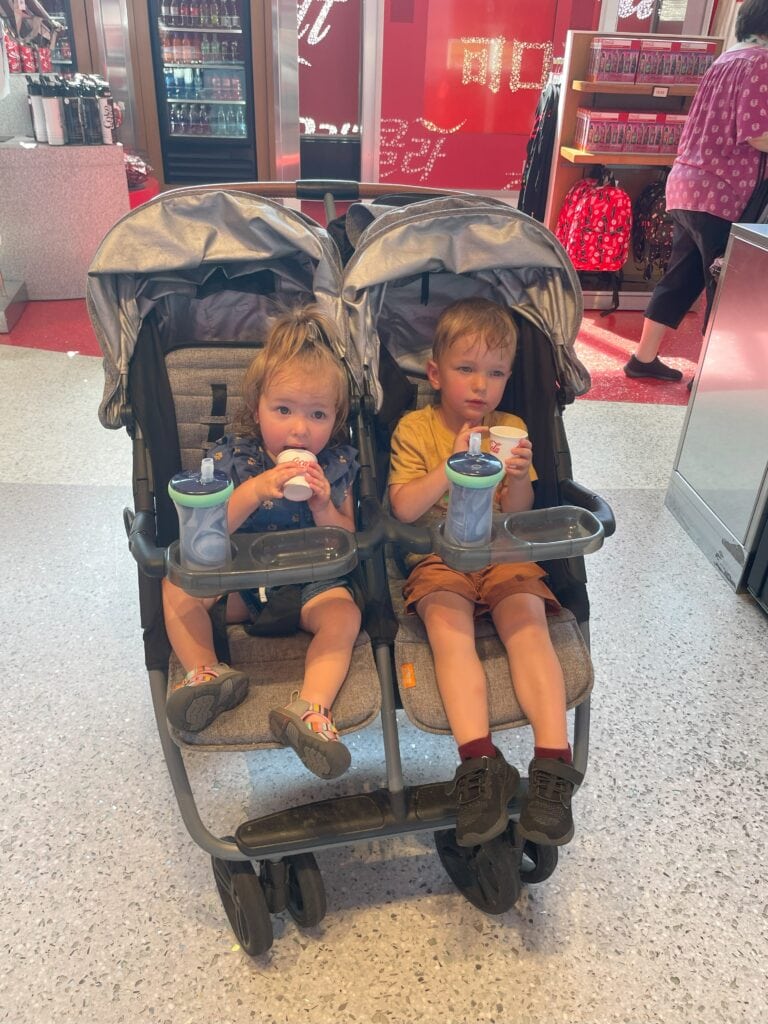
For me, that usually means using a stroller, holding hands, or keeping my kids physically connected to me in some way when crowds get intense. Even though my kids are capable walkers, there are absolutely moments while traveling where convenience takes a backseat to safety.
At Disney, for example, my kids often walk during quieter parts of the day, but during fireworks exits or crowded transportation times, they’re usually back in the stroller. There’s just too much movement happening all at once to risk someone darting off unexpectedly.
And honestly, I think parents should feel a lot less judged for things like stroller use, carriers, or toddler harnesses in crowded travel environments. Sometimes you’re not trying to “contain” your child. You’re just trying to safely move your family through a chaotic situation.
Dress Kids in Easy-to-Spot Clothing
I also try to dress my kids in bright or memorable outfits when we’re going somewhere crowded.
That doesn’t have to mean neon colors or matching family shirts, but having something easy to recognize makes it much easier to quickly spot your child in a crowd or describe them to someone else if needed.
Take a Quick Photo Before Heading Out
This is one of those simple things that takes five seconds and could make a huge difference in a stressful moment.
Before we leave for the day, I try to snap a quick photo of my kids on my phone. If we ever got separated, I’d immediately have an up-to-date picture showing exactly what they were wearing that day instead of trying to remember details while panicking.
Consider a Tracker If It Gives You Peace of Mind
A lot of parents travel with AirTags or other small trackers attached to shoes, jackets, backpacks, or stroller straps.
I don’t think they replace supervision or a safety plan, but I also think there’s nothing wrong with using tools that help you feel more comfortable navigating crowded places with young kids.
Know the Reunion Plan Ahead of Time
Whenever possible, I like knowing what the plan would be before we even arrive somewhere.
At Disney World, for example, Cast Members have procedures for helping lost children and reuniting them with their families. I like knowing that ahead of time, and I also point out Cast Members to my kids when we arrive.
Even something as simple as pointing out a meeting spot or explaining who employees are can help kids feel less panicked if they ever do get separated.
What I Do If We Get Separated While Traveling
You can do everything “right” and still end up separated from your child for a few scary moments. That’s why I think the most important thing is having a simple plan that even young kids can actually remember and follow.
Our family’s plan has two parts: my kids’ job and my job.
Their Job
If my kids ever realize they can’t find me, their job is to:
- say loudly, “I’m lost!”
- look for a safe adult nearby
- stay in one place once they’ve found help
We talk a lot about what safe adults look like when we travel. Depending on where we are, that could be a Disney Cast Member, airport staff member, lifeguard, security guard, museum employee, or another parent with children nearby.
The biggest thing I try to reinforce is not to keep wandering around looking for me. A moving child is much harder to find in a crowd.
We practice this at home before trips sometimes too, just through simple role playing so it feels familiar instead of scary.
My Job
My job is to get loud and visible quickly.
If one of my kids were missing, I’d immediately alert nearby employees or security while loudly calling out their description.
Something like:
“My daughter is lost! She’s four years old wearing a blue shirt and jeans!”
or
“My son is missing! He was just here near the aquarium entrance!”
I know that can feel uncomfortable or dramatic, but I once watched a mother do exactly this at The Strong National Museum of Play, a local children’s museum, while an employee helped her search. As they walked through the building, she kept loudly repeating her son’s description.
Within seconds, adults all around us started looking for him too.
That moment really stayed with me because it showed me how quickly a crowd can become helpful once people understand what’s happening.
Good Parents Lose Sight of Their Kids Too
If your child ever gets lost, even briefly, it’s a feeling you probably won’t forget. But I really want you to hear this: it does not make you a bad parent.
It happens to good, attentive parents all the time, especially in busy travel environments where everyone is overstimulated, distracted, and trying to manage a hundred things at once.
Kids move quickly. Crowds are chaotic. Sometimes one small moment is all it takes.
What matters most isn’t never making a mistake or never losing sight of your child for a few seconds. What matters is having a plan, teaching your kids what to do, and reacting quickly if it happens.
That preparation is what helps everyone reconnect faster and feel safer traveling together.
And honestly, just thinking about this ahead of time already means you’re doing a good job.
Have questions about this post or want help thinking through the logistics for your own trip? Join my free Facebook community for parents planning family travel. You can ask questions, share what you’re working through, and get real-life advice from other parents who understand how many little details go into traveling with kids.
More Helpful Family Travel Tips
- Traveling With Kids: How to Make the Logistics Feel More Manageable
- Child Travel Consent Letter: When You Need One
- What I Teach My Kids About Getting Lost While Traveling
- How to Travel Without Car Seats: Safe Options for Every Trip
- Staycations With Kids: The Easiest First Step for Nervous Family Travelers