

Flying With Kids: Real Tips That Make Airport Travel Easier

Flying with kids comes with a lot of moving parts, but it does not have to feel as complicated as it looks from the outside.
There is no shortage of advice out there about the “right” way to fly with babies, toddlers, and young kids. Some of it is helpful. Some of it makes airport travel feel like something you need a full system, a perfect packing list, and a suitcase full of gear to survive.
I do not think flying with kids needs to be perfect. I think it needs to be practical.
After dozens of flights with my two kids, including plenty where I was the only adult, I’ve learned what actually makes airport days feel easier. This includes what to pack, what to keep within reach, how to think through car seats and travel documents, what to expect at TSA, how to handle bathroom breaks, and how to manage the long stretch once you are finally on the plane.
A lot of my systems come from flying alone with my kids, because that is when the logistics matter most. But these tips are helpful whether you are the only adult traveling, flying with a partner, meeting family at your destination, or just trying to make the airport part of family travel feel more manageable.
This post walks through the practical flying-with-kids advice I wish I had when I started.


Airport Survival Guide for Families
Flying with kids? This guide walks you through the airport step by step, from packing and parking to security, boarding, baggage claim, and beyond.
Airport Survival Guide for Families helps you think through strollers, car seats, bags, TSA, bathrooms, snacks, gate-checking, delays, and all the little logistics that can make airport days feel like a lot.
It’s based on real family travel experience, including many flights where I was the only adult with my kids, and it’s written to help the airport part of your trip feel more manageable.
Before You Fly: Make the Setup Manageable

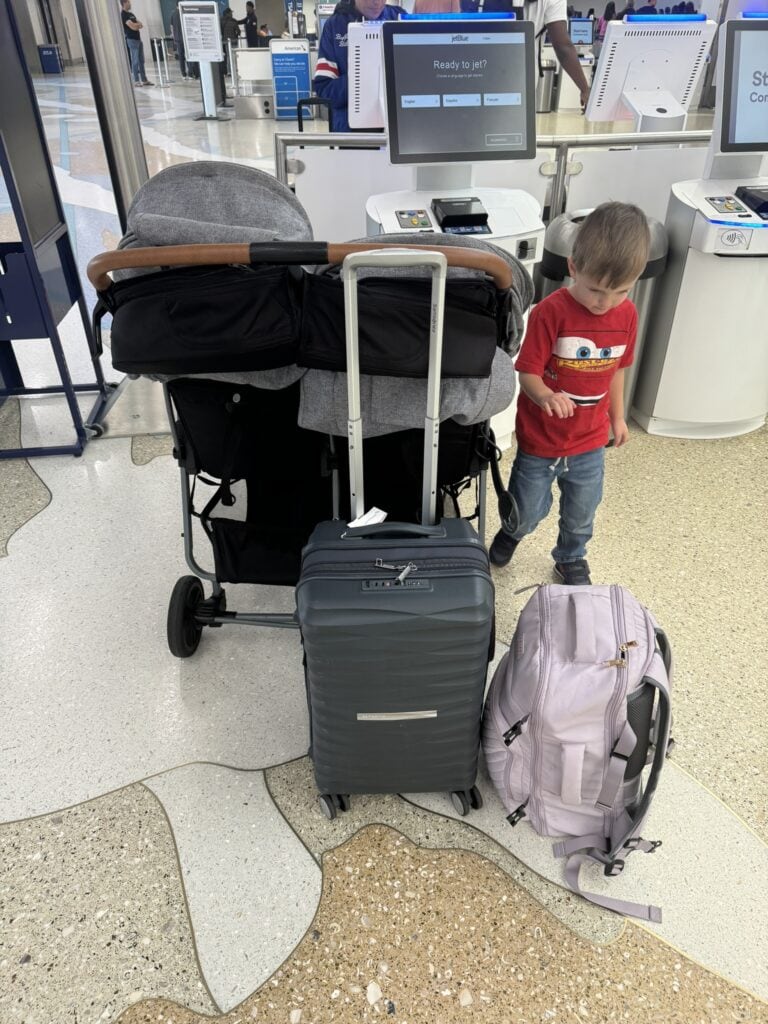
Flying with kids starts before you get to the airport. The way you pack, what you keep within reach, whether you bring car seats, and how you handle documents can make the whole day feel easier once you are actually moving.
A lot of my airport systems came from flying as the only adult with my kids, because I had to be realistic about what I could carry and manage on my own. But the same setup helps on any family travel day. The goal is to make the moving parts feel simple enough that you are not fighting your bags, your stroller, and your plans before the trip even starts.
What I Pack When Flying With Kids
Packing looks different once you are flying with kids, especially if you are also managing a stroller, documents, snacks, and little people who may or may not want to walk through the airport.
When I am flying as the only adult with my kids, I have to be realistic about what I can actually carry. There is no one else to grab a second suitcase, dig through a bag, or help when someone drops a shoe halfway through security.
I’ve done this enough times now to know what is worth bringing and what just slows us down.
These days, I usually stick to one carry-on suitcase, one big backpack, and our Zoe Twin+ stroller. That is it. Even on international trips, I pack about five mix-and-match outfits for each of us, a few comfort items from home, and enough snacks and distractions to get through the travel day. Everything fits in the overhead bin or under the seat, with no checked bags, no heavy diaper bag, and very few extras I know I will regret carrying later.
That exact setup may not be right for every family, and that is fine. Some families feel better checking bags or bringing more from home. For me, packing light is what makes the airport feel manageable.
If you want to see the full breakdown of what goes in my suitcase, what fits in the backpack, and how it all comes together, I walk through the exact list with photos in my carry-on packing guide.
What I Keep Within Reach During the Flight
After the suitcase is packed, the bag I care about most is the backpack I keep by my side from takeoff to landing.
I use a flat-lay travel backpack that opens like a suitcase, which makes it much easier to grab what I need without digging through a bottomless bag mid-flight.
This is where I keep everything we actually use while we are in transit: snacks, water bottles, meds, electronics, surprise toys, and always, always a full change of clothes for everyone. Yes, I have absolutely had a blowout ruin my shirt before we even left the gate on an international overnight flight.
I also keep our travel document wallet tucked into a front pocket. That usually holds our passports, Global Entry cards, signed consent letter, and anything else I might need to hand over quickly at check-in, security, or boarding.
The goal is not to pack every possible thing into your personal item. It is to make sure the things you are most likely to need are easy to reach when you are seated, holding a child, dealing with snacks, or trying not to unpack half your bag in the aisle.
If you’re flying with a baby or toddler and want to see what I actually pack in our carry-on, I break it all down in this post about what I keep in our backpack.
Think Through Whether You Want a Car Seat on the Plane
If your kids are still in the car seat stage, one of the things to think through before flying is whether you want to bring a car seat on the plane.
Some families feel most comfortable having their child in a car seat during the flight, and I completely understand that. Other families are comfortable using the regular airplane seatbelt once their child has their own seat. What works best depends on your child’s age, your airline’s rules, your comfort level, and how much gear you can realistically manage through the airport.
For me, this came down to logistics.
When my kids were younger, I could not physically carry two car seats through the airport by myself. Not with a stroller, luggage, a backpack, and two little kids already in tow. Adding car seats pushed the whole setup past what I could manage as the only adult.
So I did not bring them on the plane.
When my kids flew as lap infants, I held them. Once they had their own seats, they used the regular airplane seatbelt. That worked best for our family and made the airport day much more manageable for me.
That does not mean it is the right answer for every family. If you feel better bringing a car seat on board and you can manage it with the rest of your setup, that may be the better choice for you. I would also always check your airline’s rules before you fly, especially if you plan to use a car seat on the plane.
The bigger question is how the whole travel day works. Can you carry the car seat through the airport? Will it fit with your stroller and bags? Do you have another adult who can help? Will you need it once you arrive, or do you have another transportation plan?
For our trips, I usually plan around not bringing car seats from home. Once we reach our destination, that might mean booking a private transfer with seats already installed, renting car seats with a rental car, using public transportation, choosing a walkable area, or using shuttles or buses where car seats are not part of the setup.
I break down the transportation options we have personally used, along with the ones I have researched for future trips, in this post about traveling without car seats.
What Documents You May Need to Fly With Kids
Family travel documents are one of those things I like to think through before I am anywhere near the airport.
For a simple domestic trip, you may not need much beyond your own ID and your child’s basic travel information. But depending on where you are going, how old your kids are, who is traveling, and whether you are flying internationally, there can be more to bring.
You may need passports, birth certificates, proof of age for a lap infant, health insurance cards, visas, copies of important documents, or any forms required for your destination.
If you are traveling internationally without your child’s other parent, I also think it is smart to bring a child travel consent letter. I travel internationally with my kids without my husband often, and I still bring a notarized consent letter from him even though we are married and there are no custody issues. I have never been asked for it, but it is one of those documents I would rather have and not need.
The exact documents you need will depend on your trip, so this is not something I would leave until the night before. I like having everything together in one travel document wallet so I know exactly where it is when we get to check-in, security, immigration, or boarding.
I put together a family travel documents checklist to help you think through what you may need before your next trip.
Traveling with kids?
Get the Free Travel Documents Checklist for Families
Before you head to the airport, make sure you’ve thought through the documents your family may need, including IDs, passports, birth certificates, consent letters, health documents, and helpful backup copies.


A Quick Note About Global Entry With Kids
Global Entry is not something every family needs before a first trip, but it can be really helpful if you fly internationally or travel often.
My kids and I all have Global Entry, and it has made returning to the United States much easier after international trips. We have skipped long immigration lines, and because Global Entry includes TSA PreCheck, it also helps with regular airport security on domestic flights.
That said, I would not put this at the top of the list if you are just trying to get through your first flight with kids. Think of it more as a helpful upgrade for families who travel regularly or know they have international trips coming up.
If you are considering it, I walk through the application process, the interview, and what it was like getting Global Entry for my kids in this post.
At the Airport: Keep the Day Moving


Once you get to the airport, the goal is to keep everyone safe, fed, and moving in the right direction without making the day harder than it needs to be.
This is where the little systems start to matter. How you handle security, where you let the kids get some energy out, how you deal with bathroom breaks, and how much extra time you give yourself can all change the feel of the airport day.
These are the airport moments that used to make me the most nervous. Now they feel much more manageable because I know what to expect and I have a basic plan for getting through each part.
Getting Through TSA With Kids
TSA used to be the part of flying with kids that made me the most nervous.
It felt like a lot to manage at once: kids, bags, stroller, liquids, shoes, electronics, and the feeling that everyone behind me was waiting for us to hurry up. But after doing it over and over again, I’ve learned that airport security is much more manageable when you know the basic flow.
You do not need to memorize every TSA rule before you fly, but it does help to know a few things ahead of time.
You can usually bring water, milk, formula, and snacks for young kids, even when they are over the regular liquid limit.
Strollers are usually hand-checked and swabbed, so you will fold it or hand it off before walking through the metal detector.
If you are baby-wearing, you can often keep your baby in the carrier, but your hands may be swabbed.
Every airport handles things a little differently, so I try to stay flexible. I also explain what is happening to my kids as we go, and I pack our bags in a way that makes it easier to pull out what we need and put everything back together after screening.
If you are nervous about this part, I break down the full process with photos and step-by-step tips in my guide to getting through airport security with kids.
Look for Airport Playgrounds Before You Fly
Airport playgrounds can make a huge difference when you are flying with kids.
I had no idea they were even a thing until I started traveling with my own kids and looking for every possible place to let them move before a flight.
Not every airport has one, and some are definitely better than others, but when they exist, they can completely change the feel of the airport day. My kids get a place to climb, play, and burn off energy before boarding, and I get a chance to sit for a few minutes without someone climbing on terminal chairs or asking for snacks again.
Some airport play areas are small and tucked into quiet corners with soft flooring and wall games. Others are bigger play zones with climbing structures, theming, and gates that help keep younger kids contained.
I try to look for airport playgrounds before we fly, especially if we have a layover or extra time before boarding. It gives us a better plan than just wandering the terminal and hoping everyone stays patient.
In this guide to airport playgrounds, I’ve listed the ones we have personally visited, how to find them, and what to expect. I also share how I look for them ahead of time or quickly once we are already in the airport.
Have a Bathroom Plan
Bathroom breaks are one of those airport logistics that sound small until you are the parent trying to manage them.
This is especially true if you are flying as the only adult with young kids, but honestly, it can be tricky for any family. Sometimes you need to go. Sometimes a child suddenly cannot wait. Sometimes there is a stroller, a sleeping kid, a crowded airport bathroom, or an airplane lavatory that was clearly not designed with small children in mind.
Whenever I can, I look for a family restroom first. They usually give you enough space for the stroller, the bags, and everyone’s bodies without feeling like you are trying to solve a puzzle in a tiny stall.
When that is not an option, I just adapt. I have brought the stroller into larger stalls, had kids stand directly in front of me, balanced little kids in airplane bathrooms, and given many reminders not to touch anything or open the door.
It is not glamorous, but it is part of flying with kids. And like most family travel logistics, it feels less intimidating once you have a basic plan.
If you are wondering how this works in real life, I share the full breakdown in my guide to going to the bathroom when traveling alone with toddlers, including how I handle airport bathrooms, airplane bathrooms, and bathrooms in other countries.
Airport Survival Guide for Families
Flying with kids? This guide walks you through the airport step by step, from packing and parking to security, boarding, baggage claim, and beyond.
Airport Survival Guide for Families helps you think through strollers, car seats, bags, TSA, bathrooms, snacks, gate-checking, delays, and all the little logistics that can make airport days feel like a lot.
It’s based on real family travel experience, including many flights where I was the only adult with my kids, and it’s written to help the airport part of your trip feel more manageable.
On the Plane: Make the Flight Feel More Manageable


Once you are on the plane, the day changes again.
You are in a smaller space, everyone has to stay seated more than they want to, and the things you need are either under the seat, in the overhead bin, or somehow just out of reach when a child suddenly needs them.
This is where a little preparation helps. Snacks, seatbelts, naps, screens, comfort items, bathroom breaks, and the way you set up your seats can all make the flight feel easier.
I do not think the goal is to have a perfectly calm flight with kids. Sometimes the flight is loud, wiggly, snack-heavy, or uncomfortable. But when you know what to expect and have the important things within reach, it feels much more manageable.
What It Is Like Flying With a Lap Infant
Flying with a lap infant can be a really practical choice, especially when your child is under two and you are trying to keep the trip more affordable. I have done it many times, including on longer flights, and it can absolutely work.
But it is also a very physical way to travel.
For the entire flight, your baby is on you. They may be nursing, sleeping, wiggling, climbing, reaching for the tray table, grabbing your water bottle, or trying to get down when there is nowhere for them to go. Even when the flight is going well, you do not have the same freedom to move, stretch, eat, dig through a bag, or help another child.
That is why I try to get completely settled as soon as we board. Before I sit down, I pull out anything I might need during the flight: diapers, wipes, snacks, water, a change of clothes, pacifiers, toys, headphones, and anything my older child might ask for. Once the baby is asleep in my arms, I do not want to be reaching into the overhead bin or digging through a backpack under the seat.
A baby carrier can help, especially in the airport and during boarding, but I still plan for the reality that I may be holding a warm, wiggly baby for hours. Feeding during takeoff and landing can help with ear pressure, and I also try to think about bathroom breaks before the baby falls asleep.
Flying with a lap infant is doable, but it is not always comfortable. Around 18 months, my daughter started fighting it more, and that is when I started paying for her own seat.
If you are trying to decide whether a lap infant ticket makes sense for your trip, I go into more detail in my full post about flying with a lap infant, including what I pack, how I handled sleep and diaper changes, and when I stopped booking lap baby tickets.
Overnight Flights With Kids
Sometimes an overnight flight is the best option, or the only option, especially for international travel.
I have done red-eyes with my kids several times, including flights where I was the only adult. They are not exactly restful, but they are doable when you go in with realistic expectations.
For me, the biggest thing is getting the kids ready for sleep before we board. I try to let them move as much as possible in the airport, feed them a real dinner instead of relying only on snacks, and get everyone settled as soon as we sit down.
Once a child falls asleep across your lap, against your arm, or curled up in some strange airplane position, you may not be moving for a while.
I pack light, but I always bring layers because planes can get cold. Extra clothes can work as pillows, jackets can become blankets, and familiar comfort items can help kids settle. I do not bring a lot of sleep gear because I do not want to carry more than I can manage, but I do try to make our seats feel as comfortable as possible with what we already have.
My kids usually sleep for at least part of the flight, and that is enough to make the rest of the travel day feel more manageable. It may not be a full night of sleep for anyone, but it can still work.
If you have an overnight flight coming up, I share more details in my full post about overnight flights with toddlers, including seat setups, what I bring, what I skip, and what I learned about hotel check-in the morning after.
Flying With Kids Gets Easier With a Plan
Flying with kids can feel like a lot the first time you do it.
There are bags, snacks, documents, strollers, car seats, TSA rules, bathroom breaks, boarding, seatbelts, and the long stretch once you are finally on the plane. But most of those things get easier when you think through them before the travel day starts.
Everything I’ve shared in this post comes from real experience flying with my own kids, often as the only adult. Those trips taught me to pay attention to the little logistics that can make an airport day feel easier: what I can actually carry, what needs to stay within reach, how we move through security, and what helps everyone get through the flight.
Your setup may look different from mine, and that is okay. You may check bags, bring car seats, travel with another adult, fly with one baby, or manage three kids through the airport. The details will change from family to family.
The goal is to build a flying setup that works for yours.
Once you know what to pack, what to skip, what to expect at the airport, and how to handle the little moments that come up along the way, flying with kids starts to feel much more manageable.
Have questions about this post or want help thinking through the logistics for your own trip? Join my free Facebook community for parents planning family travel. You can ask questions, share what you’re working through, and get real-life advice from other parents who understand how many little details go into traveling with kids.